
DBmarlin for IBM Maximo
When Maximo is slow, it's usually the database. Find and fix the bottlenecks that slow it down, across Db2, Oracle, SQL Server and MongoDB, from one screen.
Slow databases
typically IBM Db2, MongoDB, Oracle and SQL Server
Slow Maximo screens
application screens drag for every user
Frustrated users
inefficient maintenance operations
Greater business risk
and higher costs
Why database performance matters to every Maximo customer
IBM Maximo is a strategically important asset and risk management application used by over 600 companies around the world. To give its users a fast, reliable experience it must perform well 24x7, which means monitoring database performance in detail, seeing how the technical components that make up Maximo perform and interact over time, and proactively alerting technical teams to emerging problems before they reach the users and the business Maximo is there to protect. That is why IBM recommends detailed application and database performance monitoring and optimisation.
Maximo is a database-heavy application
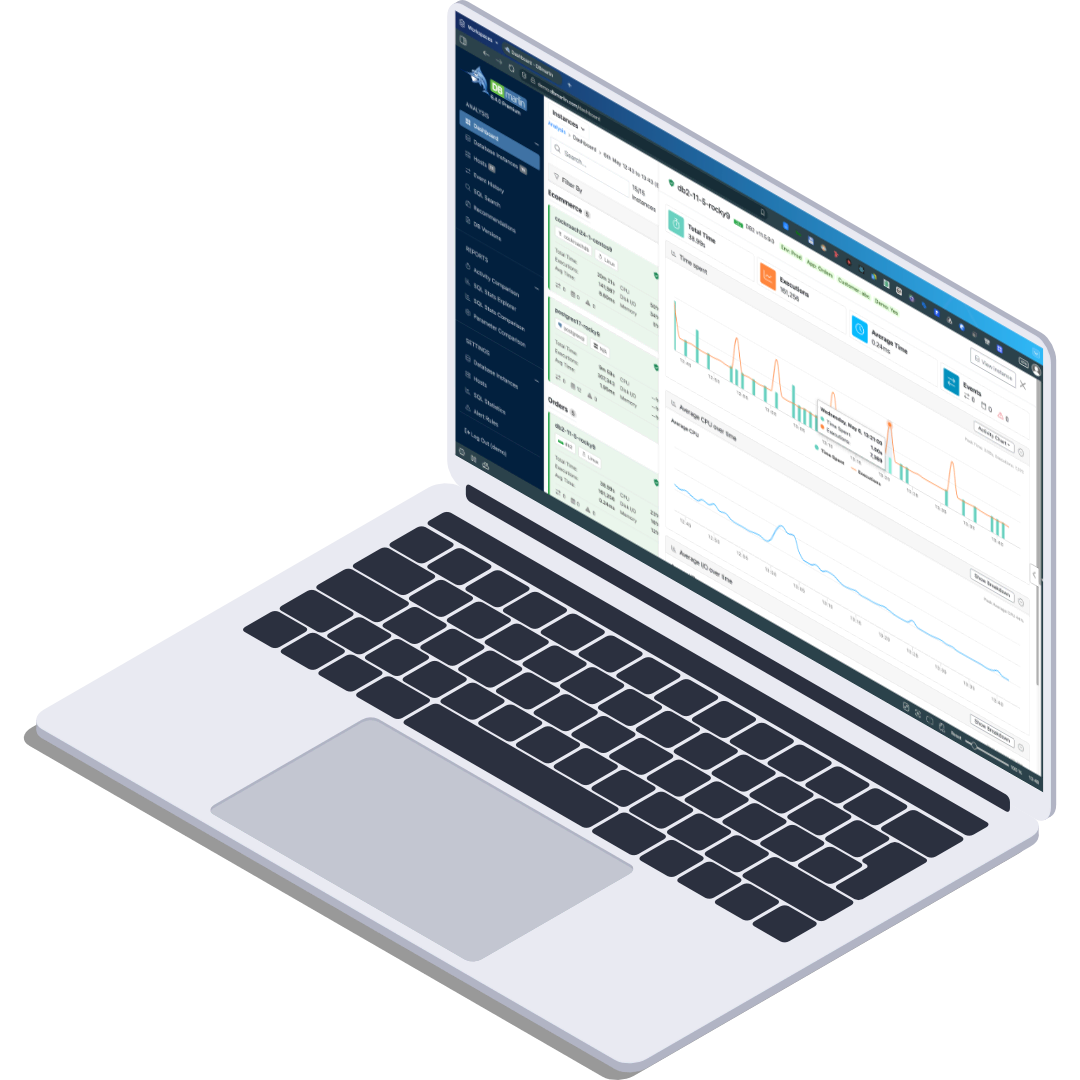
Work order queries, scheduling screens, asset hierarchies and reports all resolve to SQL, so when Maximo feels slow to the people using it, that time is usually being spent in the database. Maximo runs on IBM Db2, MongoDB, Oracle and SQL Server. DBmarlin monitors all four, at per-second granularity, with no agent to install on the database server. The problem most Maximo teams hit is visibility. You can see that a screen is slow and you can see that the database is busy. Getting from there to the individual statement, the wait it is stuck on, and the change that caused it is where the time goes. DBmarlin closes that gap, and it does it in a view that a Maximo administrator can read without being a DBA.
What Maximo teams get
Root cause in minutes, with evidence
Instead of round-trips between teams, you get the statement, the wait and the change that caused it.
Prove the difference around an upgrade
Baseline before an upgrade or fix pack, compare after, and show what actually changed.
Catch the cost of a customisation
See what a new report, portlet or KPI costs the database before your end users do.
One view for everyone who runs Maximo
SREs, DevOps engineers, developers, support teams and DBAs all work from the same picture of performance and change.
What Maximo users tell us they value
- Total database resource usage across every SQL statement, so you can see where the time is actually going
- The impact of both Maximo's built-in SQL and any custom SQL your team has written
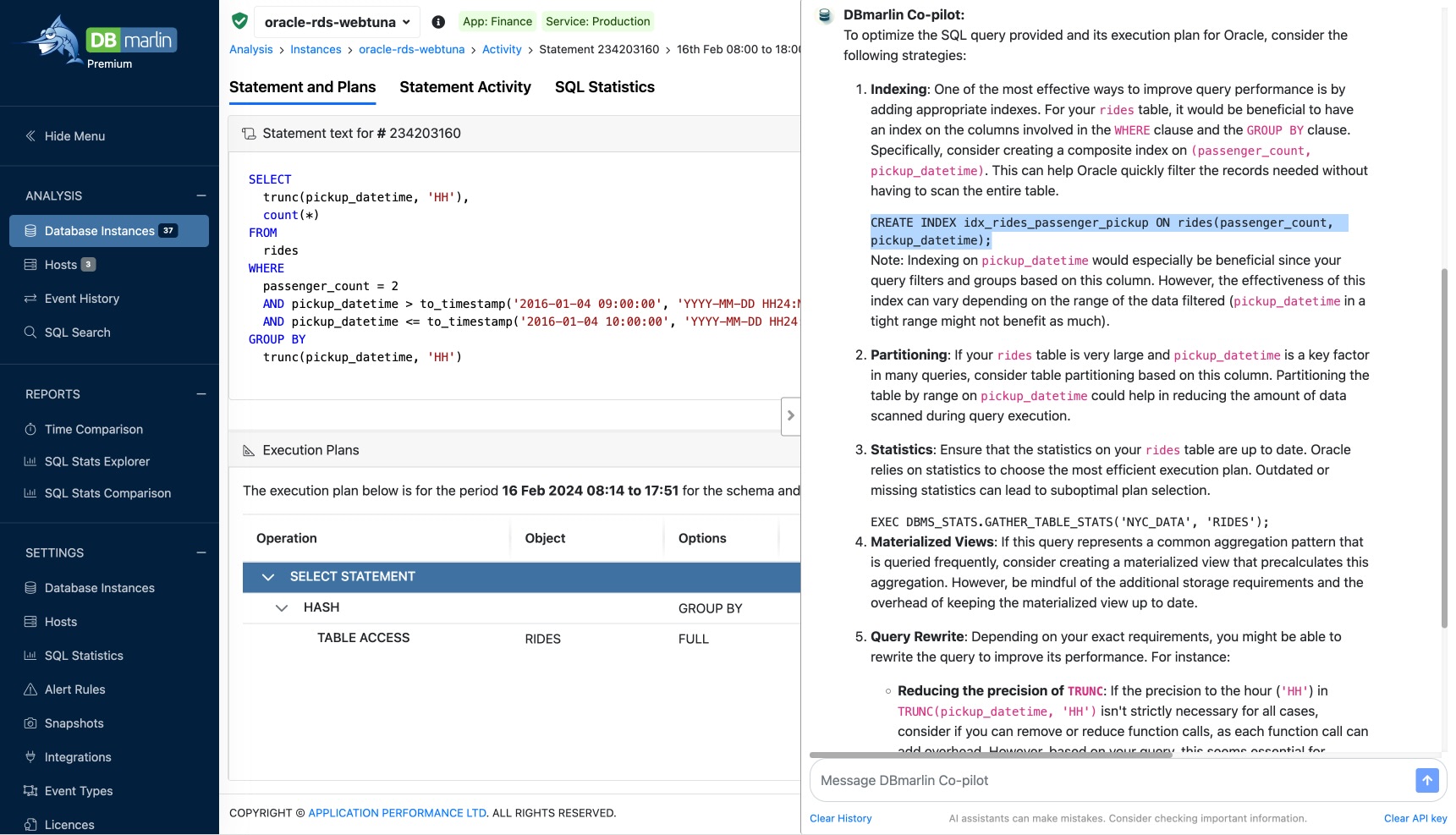
- Which statements are slowest and which consume the most resources, which are often two different lists
- Optimisation recommendations for the custom SQL behind reports, portlets and KPIs
- Insight into how your existing indexes are performing, and which new ones would help
Better together with IBM Instana
It takes one click from Instana's view of Maximo performance into any of the underlying databases. Instana tells you when a Maximo database component is slow. DBmarlin tells you why it is slow and how to fix it.
Read more about DBmarlin and IBM Instana“Instana on its own is not enough when it comes to ensuring fast Maximo performance. That is why we recommend DBmarlin to optimise database performance. Without fast database performance Maximo cannot provide its users with a good experience and its value cannot be fully realised.”

Axular Bilbao Presa
IBM Automation
One tool across your whole estate
Using DBmarlin to protect IBM Maximo performance is the ideal choice. No other solution provides the comprehensive and detailed visibility needed to ensure IBM Maximo is optimised for each customer's environment and unique requirements.
| Platform | Typical role in a Maximo estate |
|---|---|
| IBM Db2 | Maximo transactional database, Db2 Warehouse targets |
| Oracle Database | Maximo transactional database, enterprise reporting |
| Microsoft SQL Server | Maximo transactional database, reporting and BI |
| MongoDB | MAS core: identity, application catalogue, entitlements |
| PostgreSQL | Adjacent applications, integration services, reporting marts |
| MySQL and MariaDB | Departmental and satellite systems feeding Maximo |
| SAP HANA | ERP and finance systems integrated with Maximo |
| Informix | Legacy plant, metering and operational systems |
And why stop at Maximo? DBmarlin is built for SREs, DevOps engineers, developers, support teams and DBAs alike, so standardising on it across all your applications brings everyone onto a single view of performance and change.
Everything you need to get on top of Maximo performance
- DBmarlin database monitoring for every database behind Maximo, across all of your environments
- 40 hours of professional services, covering deployment, an audit of your current performance, tuning and optimisation, and training for your team
DBmarlin is agentless, samples at one second, and tracks changes on the same timeline as performance, so you can see what a deployment or a configuration change did.
Talk to us about DBmarlin for Maximo, or contact your IBM representative.
Talk to us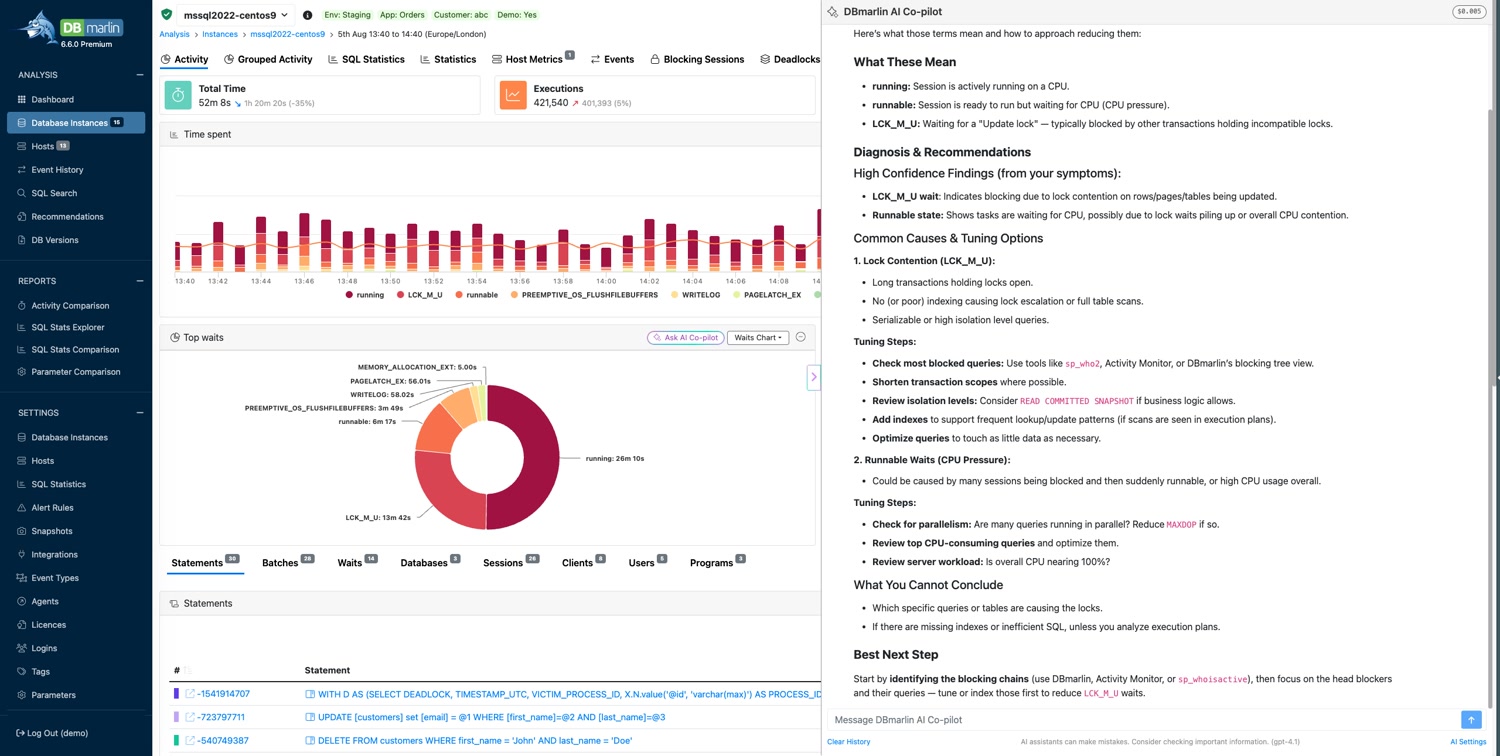
Organisations that depend on DBmarlin









What our customers say
“Being able to use one tool for tracking the query performance and health of all our database technologies has been a real game changer”
Andrew Bickerton
Principal DBA · THG Ingenuity

“AP were an early partner of Instana and we are pleased to see DBmarlin integrate into Instana which will benefit all our customers.”
Mirko Novakovic
Co-founder · Instana
“Using DBmarlin has transformed our visibility of database performance across our estate. Over the past few years we have built a great partnership, with many of our requests feeding directly into the DBmarlin roadmap”
Jay Cooke
Head of BI and Database Solutions · THG Ingenuity
Supported Database Platforms
DBmarlin monitors and accelerates performance across all the major databases








Microsoft Azure
- Azure SQL DB
- Azure SQL Managed Instance
- Azure MySQL
- Azure MariaDB
- Azure PostgreSQL

Amazon RDS
- RDS Aurora
- RDS MySQL
- RDS MariaDB
- RDS PostgreSQL
- RDS Oracle
- RDS SQL Server

Google Cloud SQL
- PostgreSQL
- MySQL
- SQL Server
- AlloyDB
Ready to get started?
Start for free, no credit card required. Monitor 1 database forever on our free tier.